
Skip to content

New Jersey Is Falling Behind with School Transportation. It's Time to Catch Up.

NJ FASST — NJ Friends of Affordable, Safe Student Transportation — is a coalition of parents, educators, nonprofits, small businesses, and taxpayers advocating for a student transportation system that is safe for every child, creates efficiencies for districts, and flexible enough to serve students whose needs don’t fit a one-size-fits-all route.
Affordability Safety Flexibility

Affordability

New Jersey school districts are under enormous budget pressure. Alternative transportation models can generally reduce the cost of serving students with specialized needs by up to 15 percent compared to traditional bus service — savings that go back to classrooms, not overhead.

Safety

Safety is non-negotiable. NJ FASST supports rigorous driver screening, continuous monitoring, real-time GPS tracking, and accountability standards that meet or exceed current requirements — right-sized to the vehicle and student population being served.

Flexibility

Today’s students don’t always fit a standard route. Students with IEPs, students in foster care, and students experiencing homelessness often need individualized, responsive transportation that traditional yellow bus fleets simply cannot provide. NJ FASST advocates for the state policy flexibility districts need to meet every student where they are.

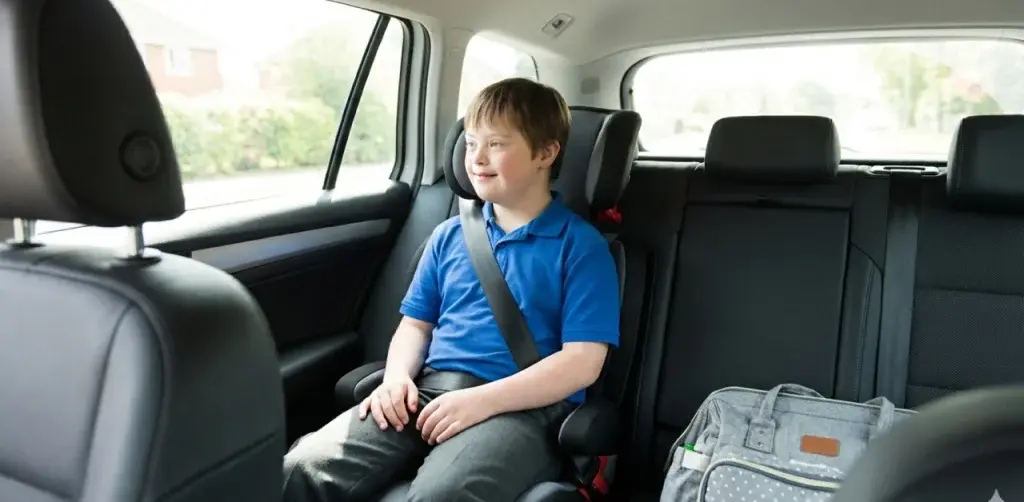
Child-riding-safely-in-a-back-seat-car-seat-1024x502

New Jersey Lags Behind Other States In Adopting Updated Transportation Options

While 41 other U.S. states have built flexible frameworks for transporting students with disabilities and students experiencing homelessness, New Jersey has not. Our state lags behind Pennsylvania, Delaware, and Maryland — and students, districts, and taxpayers are paying the price.

Students with IEP-mandated out-of-district placements may travel 30, 50, or 80 miles each way.  Under the federal McKinney-Vento Act, districts are required to provide transportation for students experiencing housing instability — students who may need to be picked up from a different address mid-year, mid-month, or even mid-week. These are not scenarios where you can simply add one more seat on an existing bus.

Students Walking Outside

The Solution Is Proven. New Jersey Needs to Act.

Yellow school buses will always have an important role in transporting kids to school. But there are additional, safe, affordable options for our most vulnerable kids. NJ FASST advocates for rigorous standards bringing modern transportation options for today’s students. Vetted alternative transportation providers — operating under contract with school districts, with full background checks, continuous driver monitoring, GPS tracking, and daily vehicle inspections — already serve students safely in the majority of U.S. states. It’s time for New Jersey’s policymakers to act to bring these proven options to student transportation in our state.

See What We’re Fighting For
63%
of New Jersey voters support allowing schools to use alternative transportation for homeless and disabled students
77%
Younger voters – those 30 and under- are the most supportive of allowing schools to use alternative transportation for homeless and disabled students

A recent Fairleigh Dickinson University poll found broad, bipartisan support for expanding student transportation options in New Jersey — with virtually no gap between Republicans (61%) and Democrats (65%).

Our Coalition

NJ FASST is led by parents, educators, nonprofits, small businesses, and taxpayers who have seen firsthand what happens when districts don’t have workable transportation options to serve students, particularly students with unique needs. We are a coalition of people who believe every child deserves a safe, affordable, flexible path to school.

Interested in supporting NJ FASST?

Get in Touch

Latest News & Resources

Stand With NJ FASST

New Jersey’s most vulnerable students need advocates who will push for a better system. Join our coalition, sign up for updates, and help us make the case that affordability, flexibility, and safety are not competing values — they are all achievable, and New Jersey is long overdue.